commonly used in solar energy installation must feature "strong anchoring and high adaptability", among which chemical anchors and expansion screws are the two mainstream options. Chemical anchors achieve stable anchoring through the chemical bonding between the adhesive and concrete, and are suitable for fixing the columns of photovoltaic (PV) brackets. Their advantage lies in controllable anchoring depth—their specifications can be adjusted according to the load-bearing requirements of the brackets, enabling them to withstand the self-weight of PV arrays, snow loads, and tensile/shear forces caused by strong winds. Expansion screws, on the other hand, realize quick fixing based on the mechanical expansion principle. They are widely used in scenarios involving lightweight brackets or temporary fixing, and are particularly suitable for roofs with qualified concrete strength (C30 or above), boasting convenient installation and relatively low costs. Additionally, in the connection of bracket beams and columns, stainless steel hexagon socket screws are often used as auxiliary fasteners due to their precise torque transmission and excellent anti-loosening performance, forming a complete connection system with the main anchoring screws.Screws commonly used in solar energy installations must possess the characteristics of "strong anchoring and high adaptability", among which chemical anchors and expansion screws are the two mainstream options. Chemical anchors achieve stable anchoring through the chemical bonding effect between the adhesive and concrete, and are suitable for fixing the columns of photovoltaic (PV) brackets. Their advantage lies in the controllable anchoring depth—their specifications can be adjusted according to the load-bearing requirements of the brackets, enabling them to bear the self-weight of PV arrays, snow loads, and tensile and shear forces caused by strong winds. Expansion screws, on the other hand, realize quick fixing based on the mechanical expansion principle. They are widely used in scenarios involving lightweight brackets or temporary fixing, and are particularly suitable for roofs with qualified concrete strength (C30 or above), featuring convenient installation and relatively low costs. In addition, for the connection between bracket beams and columns, stainless steel hexagon socket screws are often used as auxiliary fasteners due to their precise torque transmission and excellent anti-loosening performance, forming a complete connection system with the main anchoring screws.
The long-term stable operation of factory solar energy systems imposes stricter requirements on screw performance than ordinary fasteners. Weather resistance and corrosion protection are the primary indicators. Most industrial factories are located in industrial parks, where they may be exposed to corrosive media such as dust and acid-base gases. Therefore, screws should be made of 304 stainless steel or hot-dip galvanized carbon steel, with their surfaces subjected to anodization or passivation treatment to ensure no rusting under long-term exposure to sunlight and rain. Referring to the general standards for PV bracket systems, their corrosion protection performance must meet the service life requirement of over 20 years. Structural strength is equally crucial—the nominal diameter of screws should be determined based on load calculation. Generally, the diameter of screws for column fixing should not be less than M12, and their anchoring force must be verified through pull-out tests to ensure they can withstand the maximum local wind speed (some areas require withstanding extreme wind speeds of 60 m/s) and snow loads of over 1.4 kN/m². Furthermore, anti-loosening and sealing performance cannot be ignored. Screws should be equipped with anti-loosening washers or adopt a self-locking structure to prevent loosening caused by long-term vibration; meanwhile, the screw installation holes should be sealed with sealant to prevent rainwater from seeping into the roof and causing concrete aging.The long-term stable operation of factory solar energy systems places stricter requirements on the performance of screws than ordinary fasteners. Weather resistance and corrosion protection are the primary indicators. Most industrial factories are located in industrial parks, where they may be exposed to corrosive media such as dust and acid-alkali gases. Therefore, screws should be made of 304 stainless steel or hot-dip galvanized carbon steel, with their surfaces undergoing anodization or passivation treatment to ensure no rusting under long-term exposure to sunlight and rain. Referring to the general standards for PV bracket systems, their corrosion protection performance must meet the service life requirement of more than 20 years. Structural strength is equally crucial—the nominal diameter of screws should be determined based on load calculation. Generally, the diameter of screws used for column fixing should not be less than M12, and their anchoring force must be verified through pull-out tests to ensure they can withstand the maximum local wind speed (some areas require withstanding extreme wind speeds of 60 m/s) and snow loads of more than 1.4 kN/m². In addition, anti-loosening and sealing performance cannot be ignored. Screws should be equipped with anti-loosening washers or adopt a self-locking structure to avoid loosening caused by long-term vibration; meanwhile, the screw installation holes should be sealed with sealant to prevent rainwater from seeping into the roof and causing concrete aging.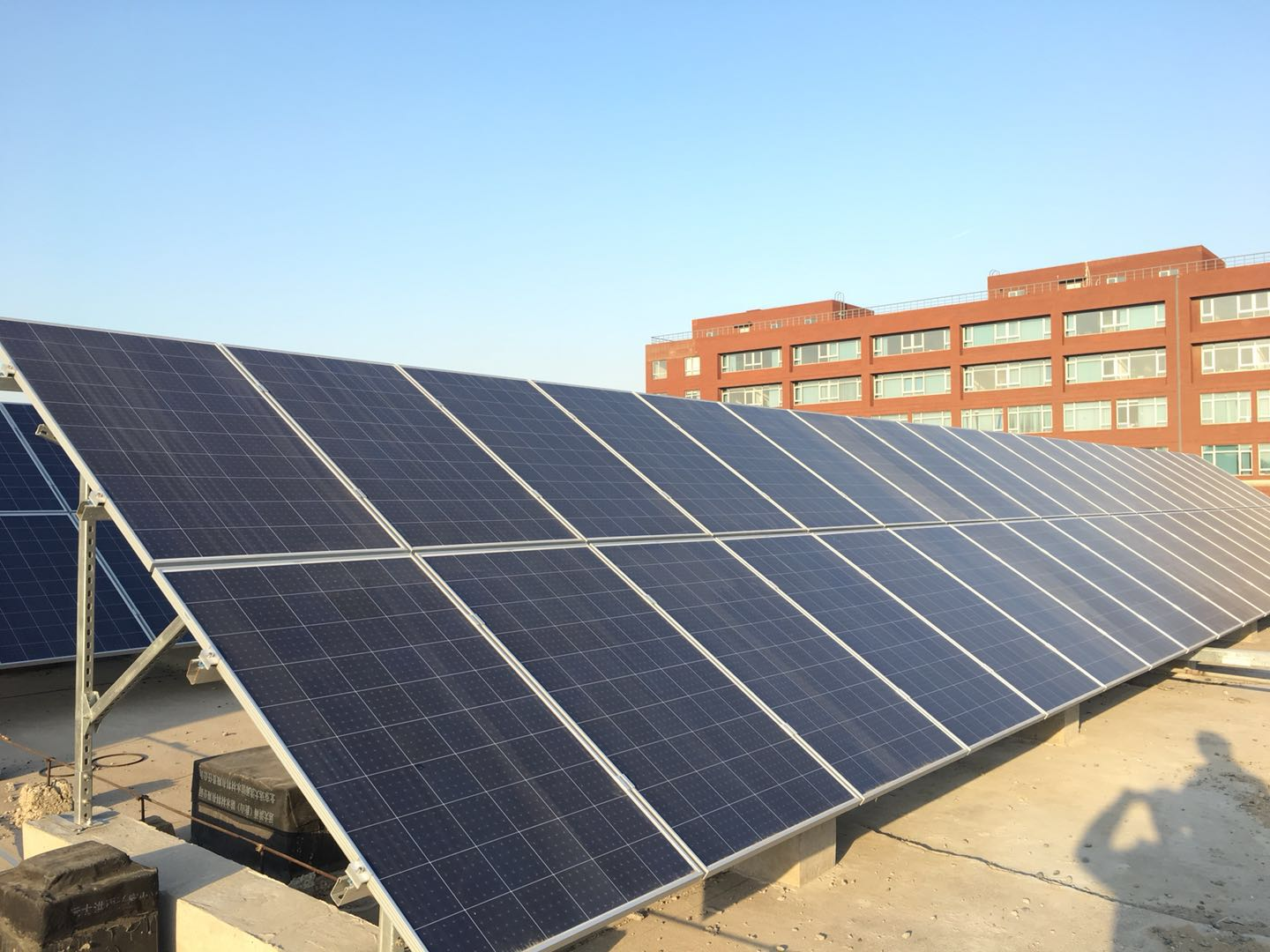
Scientific installation procedures and detailed control are the core guarantees for exerting screw performance. Two key preparations must be completed before installation: first, conduct strength testing on the concrete roof, avoid cracked or hollow areas, and if the roof has a waterproof layer, take protective measures in advance to prevent damage to the waterproof structure during installation; second, locate the screw installation points according to the PV system design drawings, ensure uniform spacing, and align with the roof load-bearing beams to reduce damage to non-load-bearing concrete areas. During installation, the drilling depth and adhesive curing time for chemical anchors must be strictly controlled, and bracket installation can only be carried out after the adhesive is fully cured (usually no less than 24 hours); for expansion screws, it is necessary to ensure that the expansion tube is fully expanded, and use a torque wrench to control the tightening force to avoid screw breakage due to over-tightening or insufficient anchoring effect due to under-tightening. It is worth noting that torque re-inspection must be carried out on all screws after installation, and key parts should be marked and test data recorded to provide a basis for subsequent maintenance.Scientific installation procedures and detailed control are the core guarantees for exerting the performance of screws. Two key preparations must be completed before installation: first, conduct strength testing on the concrete roof, avoid cracked and hollow areas, and if the roof has a waterproof layer, take protective measures in advance to prevent damage to the waterproof structure during installation; second, locate the screw installation points according to the PV system design drawings, ensure uniform spacing, and align them with the positions of the roof load-bearing beams to reduce damage to the non-load-bearing areas of the concrete. During installation, the drilling depth and adhesive curing time for chemical anchors must be strictly controlled, and bracket installation can only be carried out after the adhesive is fully cured (usually no less than 24 hours); for expansion screws, it is necessary to ensure that the expansion tube is fully expanded, and use a torque wrench to control the tightening force to avoid screw breakage due to over-tightening or insufficient anchoring effect due to under-tightening. It is worth noting that torque re-inspection must be carried out on all screws after installation, and key parts should be marked and inspection data recorded to provide a basis for subsequent maintenance.
In daily maintenance and safety management, screw status monitoring is an important link. Factory PV systems need to establish a regular inspection system, focusing on checking whether screws have rust, loosening, deformation and other issues. Especially after extreme weather such as typhoons and blizzards, the tightness of anchoring points must be rechecked one by one. For screws exposed to the outside, anti-corrosion grease can be applied regularly to enhance protection; if the rust depth of screws exceeds 10% of the diameter or the anchoring force decreases, new screws of the same specification and material should be replaced in a timely manner, and sealing treatment should be re-conducted. In addition, the principle of "professional installation and standardized operation" must be strictly followed. It is prohibited to use screws with inconsistent specifications to replace the original fasteners, so as to avoid potential safety hazards caused by short screws or insufficient strength.In daily maintenance and safety management, monitoring the status of screws is an important link. Factory PV systems need to establish a regular inspection system, focusing on checking whether screws have rust, loosening, deformation and other problems. Especially after extreme weather such as typhoons and heavy snow, the tightness of the anchoring points must be rechecked one by one. For screws exposed to the outside, anti-corrosion grease can be applied regularly to enhance protection; if the rust depth of the screws exceeds 10% of the diameter or the anchoring force decreases, new screws of the same specification and material should be replaced in a timely manner, and sealing treatment should be re-conducted. In addition, the principle of "professional installation and standardized operation" must be strictly followed. It is forbidden to use screws with inconsistent specifications to replace the original fasteners, so as to avoid potential safety hazards caused by short screws or insufficient strength.
From anchoring and fixing to structural connection, screws play a key "connecting" role in the solar energy system installed on the concrete roof of factories. Their selection and application seem simple, but in fact, they integrate knowledge from multiple fields such as material mechanics, architectural structure, and meteorology, embodying the rigorous concept of "details determine success or failure" in industrial manufacturing. Just as hexagon socket pipe plugs safeguard the sealing safety of industrial equipment, screws for solar energy installation protect the structural safety of PV systems. By attaching importance to the value of such basic components, and through scientific selection, standardized installation and regular maintenance, the factory solar energy system can not only ensure safety during long-term operation but also give full play to energy efficiency, providing reliable support for the green transformation of industry.From anchoring and fixing to structural connection, screws play a key "connecting" role in the solar energy system installed on the concrete roof of factories. Their selection and application seem simple, but in fact, they integrate knowledge from multiple fields such as material mechanics, architectural structure, and meteorology, embodying the rigorous concept of "details determine success or failure" in industrial manufacturing. Just as hexagon socket pipe plugs protect the sealing safety of industrial equipment, screws for solar energy installation guard the structural safety of PV systems. By attaching importance to the value of such basic components and through scientific selection, standardized installation and regular maintenance, the factory solar energy system can not only ensure safety during long-term operation but also give full play to energy efficiency, providing reliable support for the green transformation of industry.
